.png)
How to Sell Your Dental Practice: The Definitive Guide to Maximizing Value in a Consolidating Market
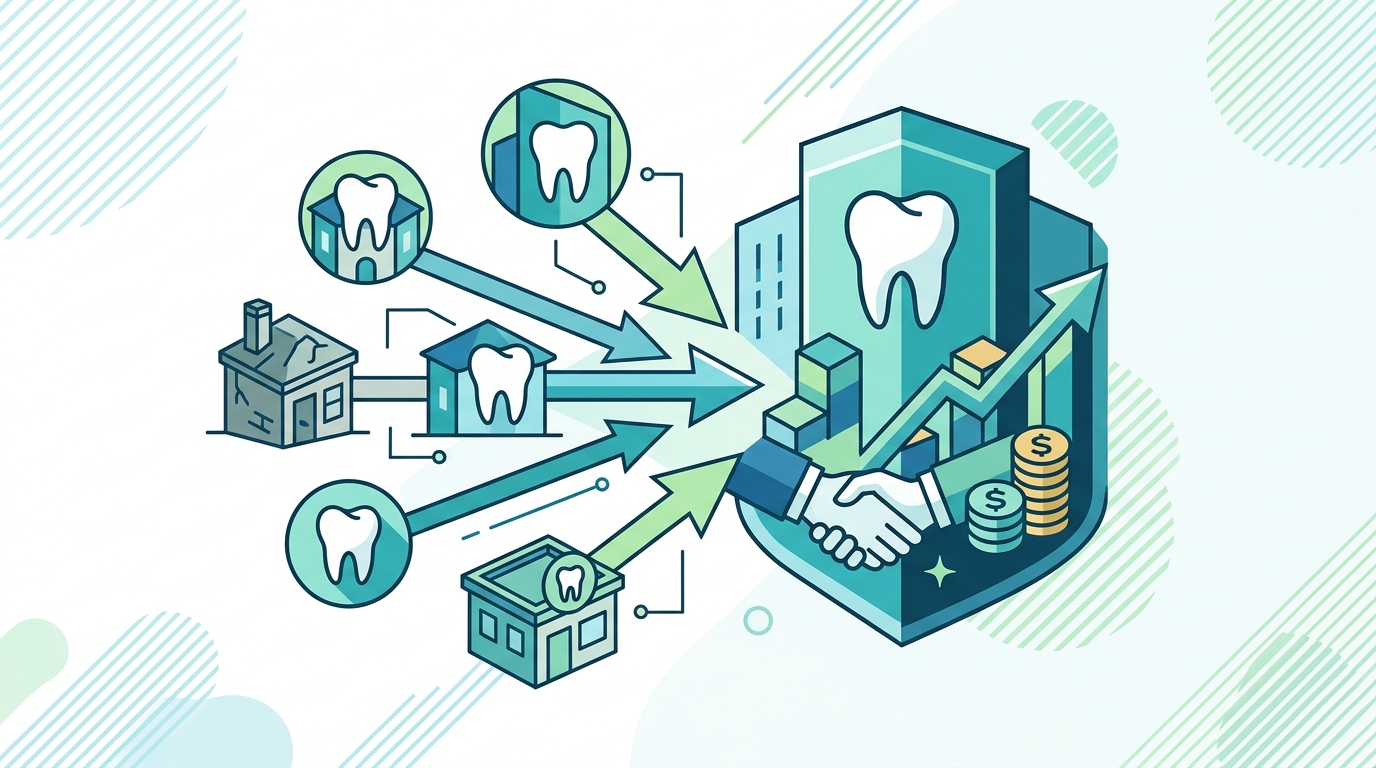
Selling a dental practice in today’s consolidating market requires strategic preparation, valuation expertise, and professional representation. DSOs and private equity dominate, making EBITDA optimization, compliance, and deal structuring critical for maximizing value.
How to Sell Your Dental Practice: The Definitive Guide to Maximizing Value in a Consolidating Market
Executive Summary: The Strategic Evolution of Dental Transitions
Selling a dental practice is no longer a simple hand-off from one retiring clinician to a local successor. In the current economic climate, the dental M&A landscape has shifted from a cottage industry to a sophisticated, institutionalized market. For the modern dental entrepreneur, the decision to sell a dental practice represents the culmination of decades of clinical excellence and business building.
Today, high-performing practices are viewed as high-yield infrastructure assets. Whether you are a solo practitioner looking for a lifestyle exit or a multi-location group owner seeking a private equity recapitalization, the "sale" is a complex financial event involving tax structuring, legal compliance, and operational audits. This guide provides the clinical business owner with a roadmap to navigate this transition with the same precision they apply to a complex surgical procedure.
1. The Dental M&A Landscape: The Rise of the DSO
The most significant trend in the last decade is the rapid consolidation of the industry. Understanding this shift is critical before you sell your dental office.
The Institutional Shift
Historically, 90% of dental practices were owner-operated. Today, Dental Support Organizations (DSOs) and private equity (PE) firms are acquiring practices at an unprecedented rate. DSOs provide the non-clinical "back office" support—HR, marketing, procurement, and billing—allowing dentists to focus on patient care.
Why Now? The Consolidation Wave
- Economies of Scale: Large groups can negotiate 20–30% lower costs on supplies and laboratory fees.
- Payer Power: DSOs have greater leverage when negotiating reimbursement rates with insurance carriers.
- The "Multiple" Arbitrage: Private equity firms buy individual practices at a lower multiple of earnings and "roll them up" into a large portfolio to sell at a much higher multiple later.
2. Understanding Dental Practice Valuation: Beyond the Basics
A common mistake owners make when preparing a dental exit strategy is relying on outdated "rules of thumb," such as "70% of last year’s collections." In the professional M&A world, this metric is obsolete.
EBITDA: The Gold Standard
Sophisticated buyers—especially DSOs—value businesses based on EBITDA (Earnings Before Interest, Taxes, Depreciation, and Amortization).
EBITDA = Net Income + Interest + Taxes + Depreciation + Amortization
For a dental practice, we use Adjusted EBITDA. This involves "adding back" personal expenses the owner runs through the business (e.g., luxury car leases, non-business travel, or family members on payroll) and adjusting the owner's clinical salary to a fair market rate (typically 25–30% of their personal production).
Key Value Drivers in Dental M&A
To maximize your dental practice valuation, you must optimize these four pillars:
- Hygiene Production: High-value buyers look for practices where hygiene accounts for 25–35% of total revenue. It represents recurring, predictable income.
- Associate Stability: If the revenue is 90% dependent on the selling doctor, the risk is too high. A "sellable" practice has a strong associate team.
- Payer Mix: A healthy balance of PPO and Fee-for-Service (FFS) is preferred over heavy Medicaid dependence.
- Facility & Tech: A paperless office with digital scanners and modern operatories commands a premium.
3. Buyer Types: Identifying the Right Fit
Not all money is created equal. When you sell a dental business, the type of buyer determines your post-sale life.
**Buyer Type** | **Typical Motivation** | **Deal Structure**
**Individual Dentist** | Lifestyle, autonomy, local legacy. | Asset sale, often 100% cash or SBA loan.
**DSO (Dental Support Org)** | Scalability, EBITDA growth, market share. | 60-80% cash at close, 20-40% "equity rollover."
**Regional Group** | Regional synergies, talent acquisition. | Blended cash/equity, often higher operational involvement.
What DSOs Look For
DSOs aren't just buying your patient list; they are buying your systems. They want to see a repeatable process for patient acquisition and a culture that can survive the founder’s eventual departure.
4. Preparing for the Sale: The 12–24 Month Timeline
You cannot decide to sell your dental practice on a Friday and close on a Monday. Maximum value requires a "runway."
Phase 1: Financial Hygiene (Months 12–24)
- Normalize Financials: Ensure your P&L statements are clean. Separate personal expenses clearly.
- Optimize Billing: Clean up your Accounts Receivable (AR). High AR over 90 days is a red flag to auditors.
Phase 2: Operational De-Risking (Months 6–12)
- Audit Compliance: Ensure all HIPAA and OSHA documentation is flawless.
- Employment Agreements: Ensure associates have enforceable restrictive covenants (non-competes). Without these, the "goodwill" of the practice is at risk.
Phase 3: The Marketing Launch (Months 1–6)
- Curb Appeal: Small cosmetic upgrades to the office can yield a 5x return in perceived value.
- Patient Retention: Ensure your active patient count is verified and growing.
5. Deal Structure and Tax Implications
The "sticker price" of a dental business sale is often less important than the "net-to-seller" after taxes.
Stock vs. Asset Sale
- Asset Sale: The buyer buys the equipment, charts, and goodwill. This is common in smaller sales.
- Stock Sale: The buyer buys the legal entity. This is often more tax-advantaged for the seller but carries more risk for the buyer.
Equity Rollover and Earn-Outs
In a DSO acquisition, you might be asked to "roll" a portion of your proceeds into the parent company’s stock.
Example: You sell for $5M. You receive $4M in cash and $1M in DSO stock. If the DSO sells to a larger PE firm in five years, that $1M could theoretically turn into $3M—this is known as the "second bite of the apple."
6. Common Pitfalls to Avoid
Even the most successful clinicians can fail at the M&A table.
- Letting Production Slip: Once a letter of intent (LOI) is signed, many doctors lose focus. If your production drops 10% during due diligence, the buyer will likely "re-trade" (lower) the price.
- Overestimating Goodwill: Clinical skill is personal; systems are transferable. Buyers pay for the latter.
- DIY Negotiations: The DSO on the other side of the table has done 50 deals this year. If this is your first, you are at a massive disadvantage without an advisor.
7. the advisory Advantage: Why Professional Representation Matters
At an experienced M&A advisor, we don't just list businesses; we engineer exits. Selling a dental practice is a high-stakes clinical operation for your finances.
- Confidentiality: We manage the flow of information so your staff and competitors don't find out until the deal is done.
- Competitive Tension: By bringing multiple qualified buyers (DSOs and private groups) to the table, we drive the price up through a structured bidding process.
- Experience: We speak the language of private equity. We know which DSOs have the best culture and which ones have "integration issues."
Final Takeaway: Your Legacy, Secured
The dental market is in a period of "forced evolution." While the opportunity to exit at a high multiple is currently strong, the window of peak consolidation will not stay open forever. Strategic preparation is the difference between "getting out" and "moving up."
Frequently Asked Questions (FAQs)
1. How long does it take to sell a dental practice?
Typically, the process takes 6 to 9 months from the initial valuation to the final closing, provided your financials are in order.
2. What is the average multiple for a dental practice sale?
While solo practices often trade between 60–80% of revenue, larger practices or groups selling to DSOs are valued on EBITDA, with multiples currently ranging from 4x to 8x+ depending on scale.
3. Do I have to stop practicing immediately after the sale?
Most DSO buyers require the selling doctor to stay on for 2–5 years to ensure a smooth transition of patient trust and clinical standards.
4. How is "goodwill" calculated in a dental sale?
Goodwill is the intangible value of your patient list, brand reputation, and trained staff. In a dental sale, it often accounts for 70–80% of the total purchase price.
5. Should I tell my staff I am selling?
Generally, no. Confidentiality is paramount. Staff should usually be informed only once a deal is nearly certain, often just before or at the time of closing, to prevent turnover.
Dental practice sales considerations are particularly relevant for business owners across Northeast Ohio — Cleveland, Chagrin Falls, Cuyahoga County, and Geauga County — where a high concentration of privately held businesses in the $1M–$5M revenue range operate across industrial, services, and trades sectors. Owners in this market deserve advisors who understand both the transaction and the regional context in which it occurs.
Dental practice owners across Northeast Ohio considering a DSO transaction or private sale engage Ben Calkins to structure the exit that protects clinical legacy and maximizes net proceeds.
Ben Calkins | Fast Forward Business Advisors
M&A Advisory — Northeast Ohio
Call directly: 440-595-4300
Subscribe to our newsletter
Lorem ipsum dolor sit amet, consectetur adipiscing elit. Suspendisse varius enim in eros elementum tristique.
More Seller's Playbook
Answering your most pressing questions is the first step. Explore our comprehensive library of guides, articles, and checklists to help you start planning your journey.